Sorting games build the habit of describing a rule, testing examples and noticing exceptions.
What you will learn
A useful sorting rule consistently explains each group.
Skills: Classification, explanation and rule-making
Jump to picture steps ↓What you’ll need
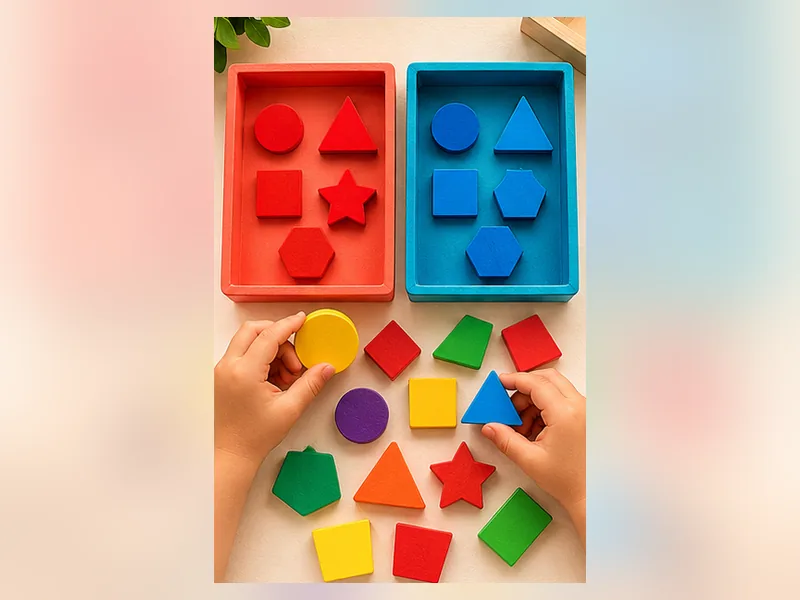
- Six to twelve safe household objects
- Two bowls or sheets of paper
Get ready: Prepare clean, large, safe objects with visible differences.
Make it, one picture at a time.
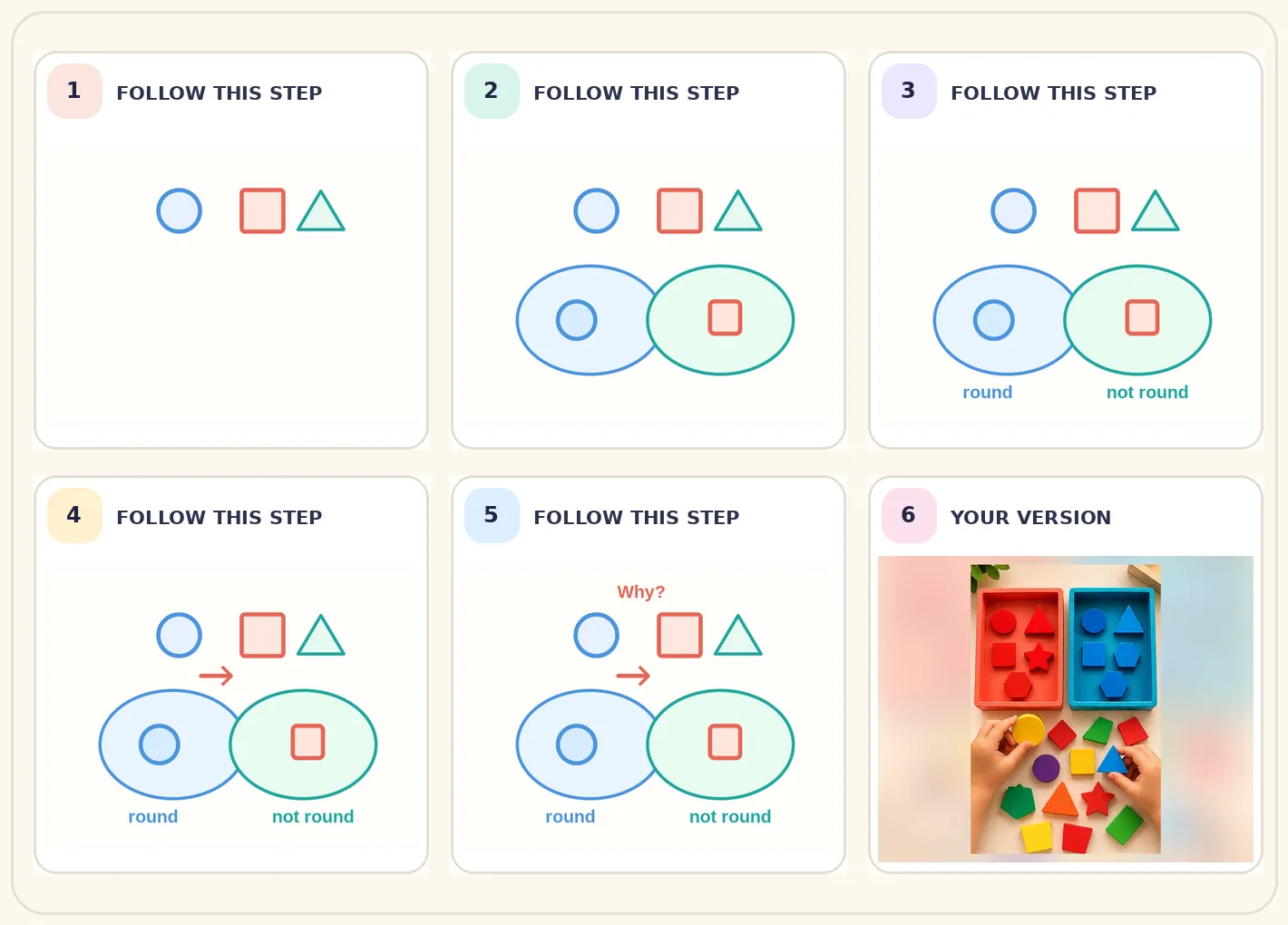
Look at the picture, try that step on your paper, then move to the next. Follow the numbered stages, then choose your own colours and details.
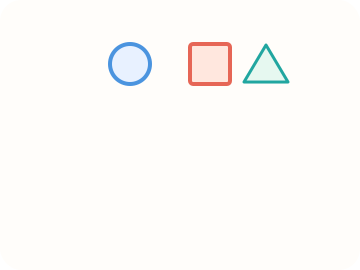 STEP 01
Collect clean, safe objects such as blocks, pencils or paper shapes.
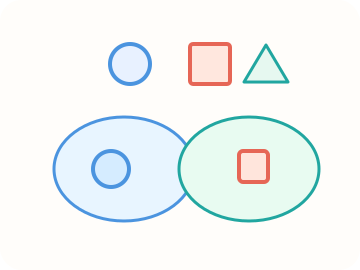 STEP 02
Sort them into two groups using one rule, such as “round” and “not round.”
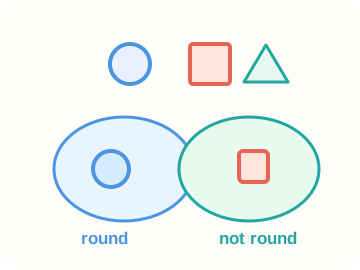 STEP 03
Ask someone to guess the rule by looking at the groups.
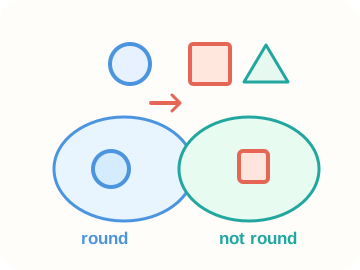 STEP 04
Change the rule to something less obvious, like “can roll” and “cannot roll.”
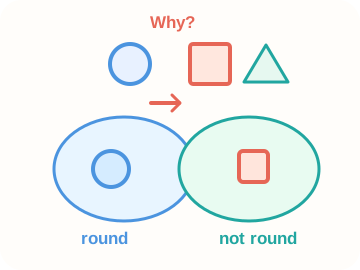 STEP 05
Explain why one object belongs in a group. Check for examples that do not fit.
Make it your own
Some objects fit more than one description. That makes a useful conversation about defining rules clearly.
Talk about it: Why does this object belong in this group?
Help a young artist learn
These practical notes are for parents, carers and teachers. Children can follow the picture steps above.
For parents and carers — teach together
Start together
Prepare clean, large, safe objects with visible differences.
During the activity
Ask for the reason behind each choice instead of correcting quickly.
Afterwards
Ask: Why does this object belong in this group?
For teachers — classroom adaptation
Learning focus
Classification, explanation and rule-making
Demonstrate and guide
Ask groups to invent hidden sorting rules that classmates can infer.
Observe, do not grade the artwork
Ask learners to describe one choice they made and one thing they would try differently.
Make it easier or take it further
Make it easier
Separate only circles and squares.
Extra challenge
Make a sorting rule with two features, such as colour and shape.
Keep creating
Try an unplugged coding maze
Practice instructions and debugging using arrows instead of a computer.
Draw patterns using just three colours
Explore repeating patterns without needing any complicated drawing skills.
Activities are suggestions, not assessments. Adapt materials and supervise as needed.