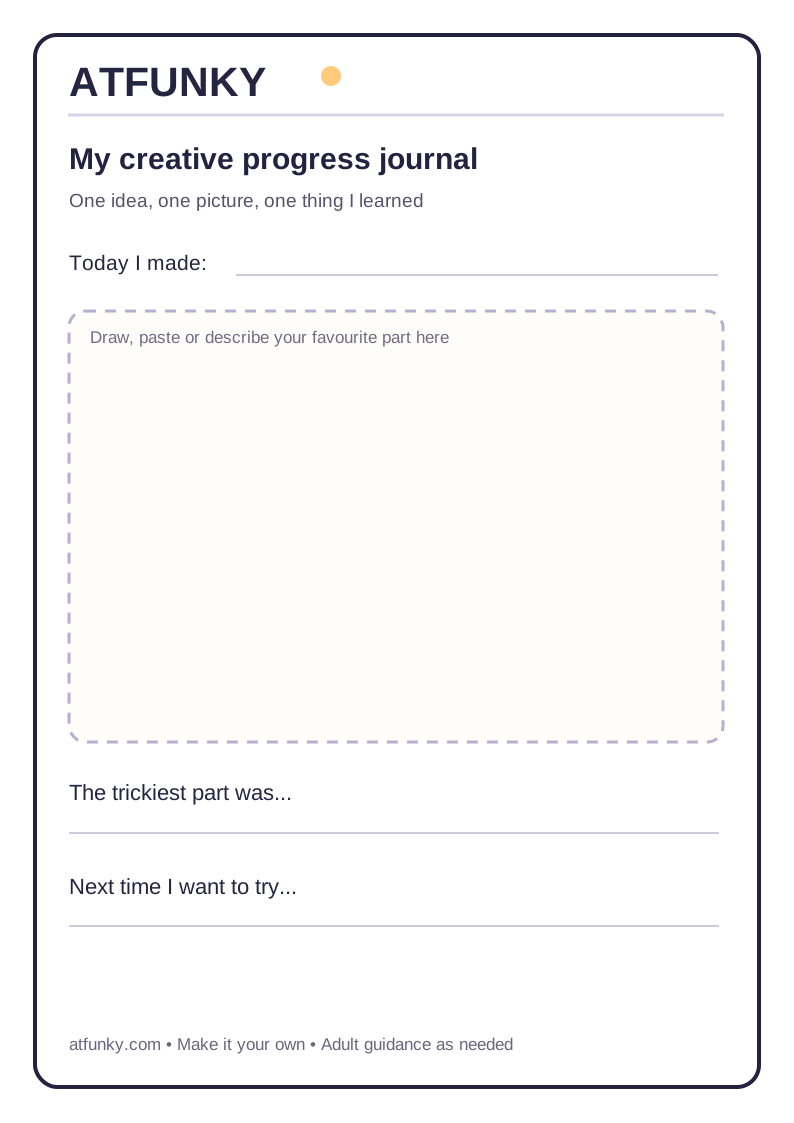
Children build confidence drawing from simple shapes, practise choosing visual details, and tell a short story about a character.
Prepare the materials
- Plain paper or a sketchbook
- Pencil and eraser
- Colour pencils or crayons
There is no rush to finish in one week. Repeat an activity when a learner wants more practice. Adults handle tools and devices that need supervision.
Four guided sessions
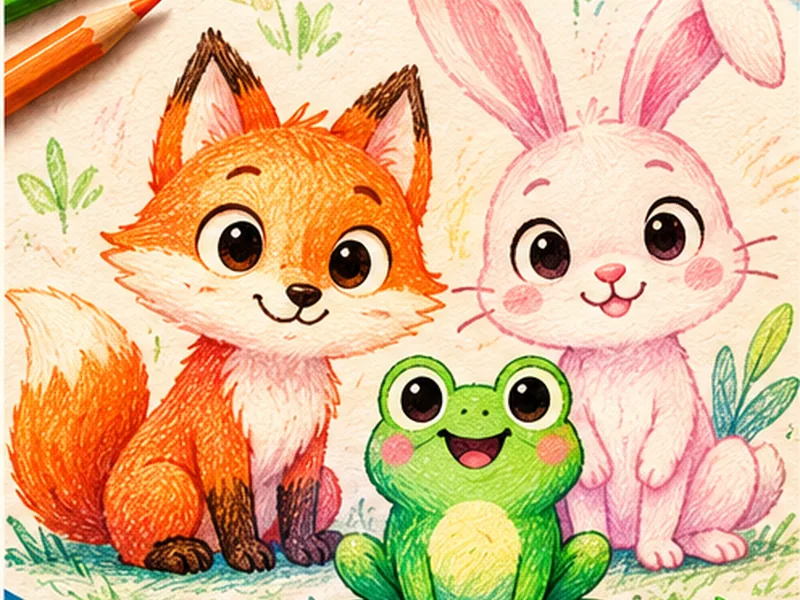
Discover your shapes
Learning goal: Notice how circles, squares and triangles can become recognisable animals.
For parents: Draw one circle beside the child, then ask what it could become. Give them time to choose.
For teachers: Warm up with three shapes on the board, then invite different animal ideas.
Ask afterwards: Which shape helped you most, and why?
Open the illustrated lesson →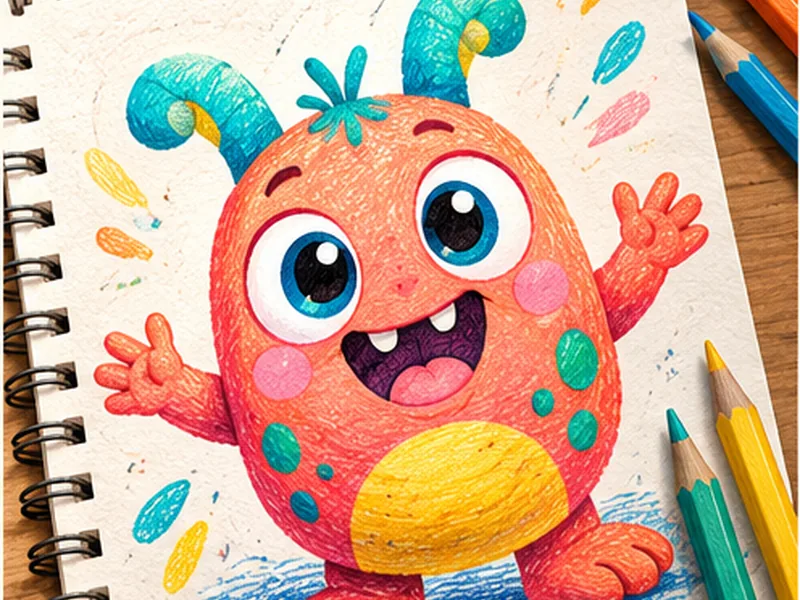
Invent a friendly monster
Learning goal: Add a face, limbs and one surprising feature to a simple body shape.
For parents: Praise the character’s unusual choices instead of asking for perfect copying.
For teachers: Compare how different details can change a character’s mood.
Ask afterwards: What makes your monster friendly?
Open the illustrated lesson →
Try exciting marks and colour
Learning goal: Experiment with repeated lines, patterns and contrasting colours.
For parents: Try drawing side-by-side using two different patterns.
For teachers: Set up a colour-and-pattern station where children can share tools.
Ask afterwards: Which pattern was fun to make?
Open the illustrated lesson →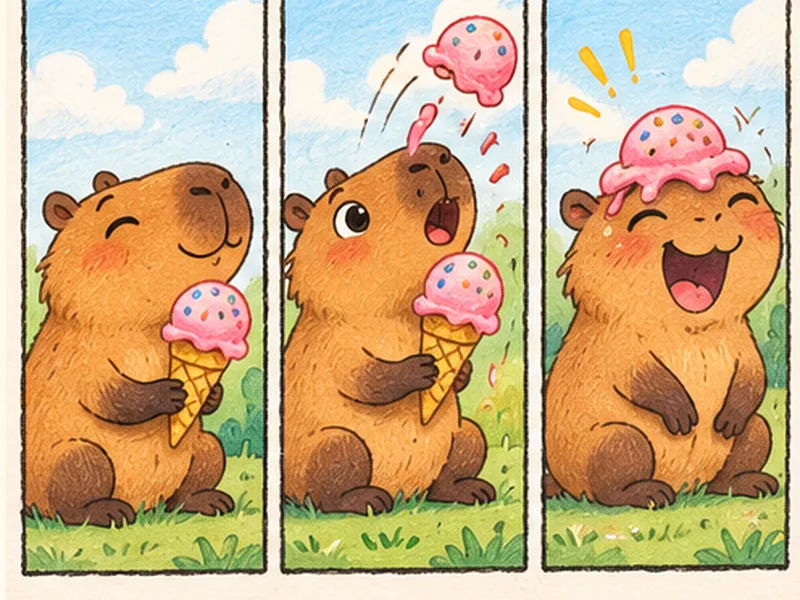
Tell a story in three pictures
Learning goal: Give a character a beginning, a surprise and an ending.
For parents: Invite the child to describe each scene before they draw it.
For teachers: Let pairs tell their comics aloud; keep artwork evaluation optional.
Ask afterwards: What happened to your character?
Open the illustrated lesson →Reflect and keep creating
Save finished artwork in a folder, date each page if you wish, and ask what the learner enjoyed making. Avoid ranking one child’s results against another’s.